DevOps · By Ram ·
47 Tools, 9 Teams: Our DevOps Consolidation Story
We found 47 different DevOps tools across 9 engineering teams, leading to duplicate spend and integration nightmares. Here's how we consolidated without chaos.
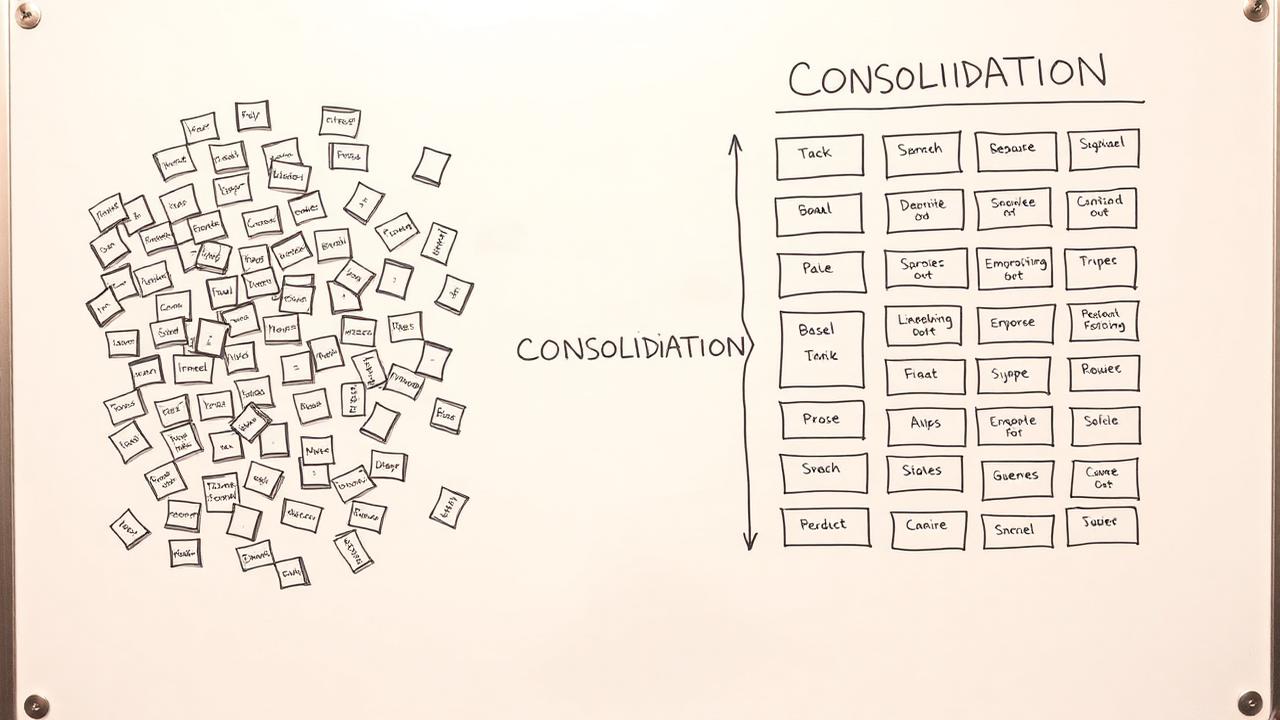
47 Tools, 9 Teams: Our DevOps Consolidation Story
At a previous role, I inherited a sprawling landscape of DevOps tools. We had 9 distinct engineering teams, each making independent decisions, which collectively led to a staggering 47 different tools in use across the organization. The operational overhead, licensing costs, and sheer complexity were crushing us. The critical moment came in week twelve when an external audit highlighted 18% budget overlap due to redundant tooling.
The Accidental Tool Sprawl
When I joined as the lead SRE, the company had grown organically over five years. Each of the nine product teams, ranging in size from 8 to 25 engineers, had considerable autonomy to pick their own tools. This freedom was initially empowering but, without central guidance, it led to significant fragmentation. We had, for instance, three separate CI/CD platforms, four different artifact repositories, and an astonishing five distinct monitoring solutions.
Initial Discovery and Categorization
My first task was to get a clear picture. I mandated a two-week period for all team leads to submit a list of every tool they used, its purpose, and its annual cost. The raw data collection was itself a revelation. Many teams were surprised to see the breadth of tools others were using, and some even discovered duplicate internal subscriptions they were unaware of. We then categorized these 47 tools into 12 core DevOps functions: CI, CD, Code Scanning, Artifact Mgmt, Secret Mgmt, Observability, Orchestration, IaC, Test Automation, Incident Mgmt, Version Control, and Project Mgmt.
The Cost of Duplication: 18% Overlap
After compiling the lists, the financial analysis was stark. We had an annual spend of $1.8 million across all tools. My team cross-referenced functionalities and licensing. We identified direct overlaps, where two or more teams paid for separate licenses of tools that served the identical purpose. This accounted for $324,000, or 18% of the total budget, spent on redundant capabilities. Beyond direct costs, the integration tax was immeasurable — bespoke connectors between disparate systems, context switching for engineers, and limited cross-team visibility.
Establishing a Central Tooling Council
To avoid a political turf war, I proposed the formation of a "DevOps Tooling Council." This wasn't a top-down mandate; it was a representative body with a lead engineer from each of the 9 product teams, plus myself and a finance representative. Our mandate was simple: evaluate existing tools against identified needs and propose a consolidated stack. Decisions required a supermajority (7 of 9 team leads), ensuring buy-in and shared ownership rather than forced adoption.
Consolidation Strategy: "Adopt, Consolidate, Deprecate"
- Adopt: For essential functions where a clear best-of-breed existed and had significant organizational adoption (e.g., GitLab for Version Control/CI/CD, Vault for Secret Management), we designated it the standard.
- Consolidate: Where multiple tools served the same purpose, we evaluated them based on features, cost, ease of migration, and existing usage. For instance, we had three different artifact repositories. We chose Artifactory Pro and provided migration paths and support for teams on Nexus and Sonatype.
- Deprecate: Tools identified as redundant or low-value, often those with only one team using them, were slated for deprecation within a 6-month window.
central_cicd_platform:
  name: "GitLab CI/CD"
  version: ">14.0"
  teams_to_migrate_from:
    - "Jenkins"
    - "CircleCI"
  migration_timeline_days: 90
Measurable Outcomes and Lingering Challenges
Over a full year, we reduced the tool count from 47 to 28, a 40% reduction. This directly translated to a 15% reduction in annual licensing costs ($270,000 saved, close to our 18% target overlap). Engineer satisfaction surveys showed a 25% increase in sentiment around tool consistency and reduced learning curve. However, not everything was solved. We still struggle with aligning on a single logging platform. While Grafana Labs (Loki + Promtail) achieved 70% adoption, two teams maintained Splunk instances due to very specific compliance requirements, which was a compromise we had to accept for now.
What I'd do Differently
If I were to do this again, I would have established the Tooling Council much earlier in the company's growth cycle, perhaps when we hit 3-4 engineering teams. Proactive standardization, even soft guidance, would have prevented much of the sprawl from ever happening. Additionally, I would have pushed harder for a dedicated migration engineering team from day one, rather than relying on individual teams to perform migrations themselves. That would have accelerated the consolidation significantly.